If you’ve noticed changes in your hearing, you might wonder: Who should I see first? Should I go to an audiologist, an ENT, or a hearing instrument specialist? It’s a common question we hear at Happy Hearing Clinic in Winchester, KY, and the answer depends on your needs. This Hearing Healthcare Professionals FAQ will help you understand the roles of different providers, so you can feel confident about where to begin your hearing health journey.
FAQ #1: What is an audiologist?
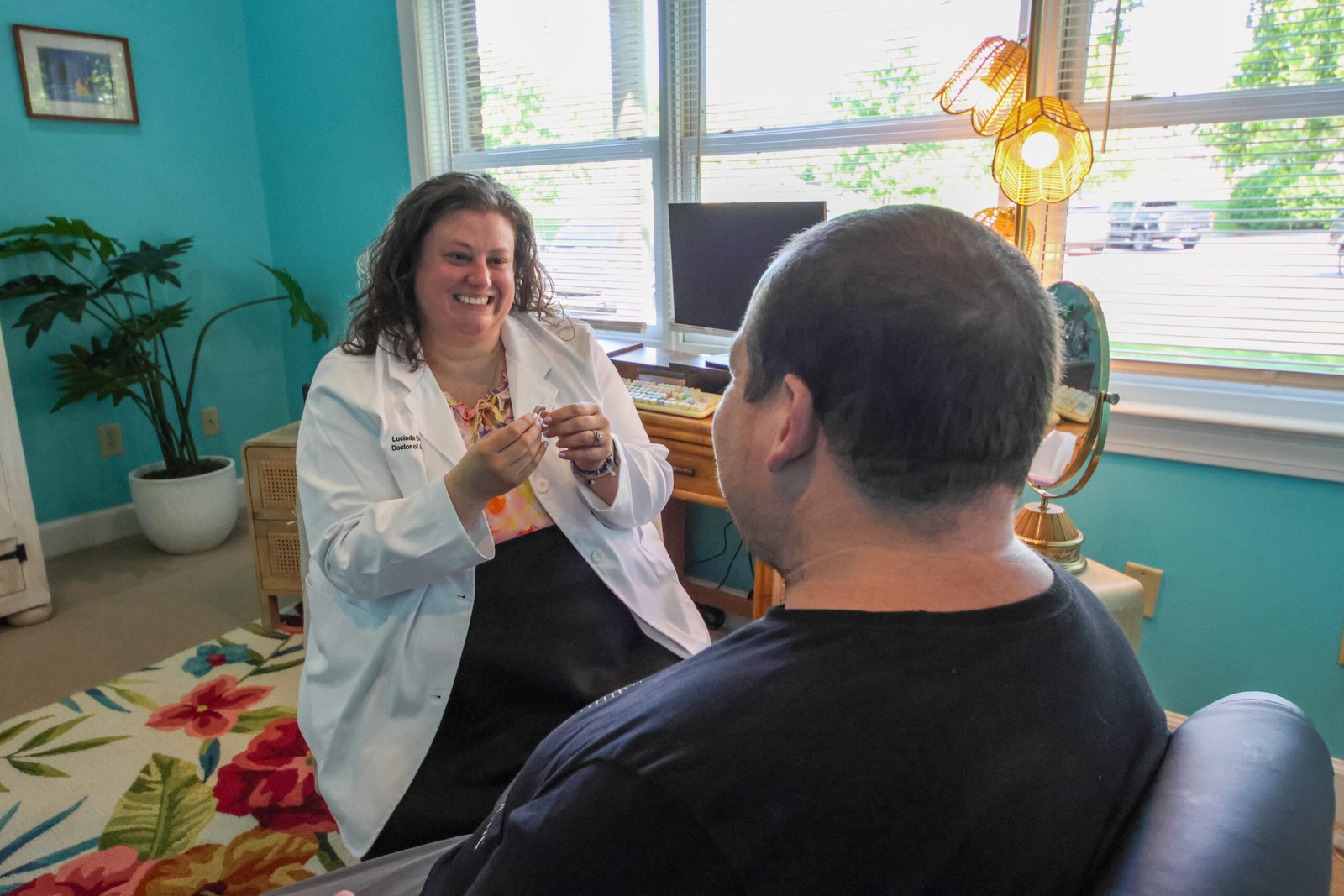
An audiologist is a healthcare professional who specializes in hearing and balance disorders. Audiologists hold doctoral-level degrees (AuD or PhD) and are trained to diagnose, manage, and treat a wide range of auditory conditions. At Happy Hearing Clinic, our audiologist provides comprehensive hearing evaluations, fits hearing aids, manages cochlear implants, and helps patients with tinnitus. Audiologists are often your best first step because they can identify whether hearing loss is medical, noise-related, or age-related (AAA, 2024).
FAQ #2: What is an ENT (Otolaryngologist)?
An ENT, also known as an otolaryngologist, is a medical doctor who specializes in conditions of the ear, nose, and throat. They diagnose and treat medical issues such as ear infections, eardrum perforations, chronic sinusitis, and tumors. If surgery or prescription medication is needed, an ENT is the right professional. Audiologists and ENTs often work hand in hand—an audiologist may refer you to an ENT if a medical problem is suspected (CDC, 2024).
FAQ #3: What is a hearing instrument specialist?
A hearing instrument specialist (HIS) is trained to test hearing and fit hearing aids, but they do not diagnose medical conditions. In Kentucky, HIS providers are licensed professionals who focus on hearing technology. They can be an excellent resource for hearing aid fittings but will refer you to an audiologist or physician if they detect signs of medical issues (NIDCD, 2024).
FAQ #4: Who should I see first if I think I have hearing loss?
Most patients should start with an audiologist. An audiologist can test your hearing, explain the type of hearing loss you have, and guide you to the right solution. If medical treatment is needed, the audiologist will coordinate with an ENT. This saves time, money, and ensures you’re getting the most appropriate care from the start (WHO, 2024). Hearing Evaluations
FAQ #5: Do audiologists prescribe medication?
No. Audiologists do not prescribe medication or perform surgery. Instead, they focus on diagnosing and treating hearing loss with technology and counseling. If medication or surgery is required, you will be referred to an ENT. This partnership ensures all aspects of your hearing health are covered (AAA, 2024).
FAQ #6: Can hearing instrument specialists fit cochlear implants?
No. Only audiologists and ENT surgeons manage cochlear implants. Audiologists handle the programming and long-term care, while ENTs perform the surgery. Hearing instrument specialists are available to fit and maintain hearing aids (NIDCD, 2024). Cochlear Implant
FAQ #7: What’s the difference in education between these professionals?
- Audiologists: Doctoral degree (AuD or PhD), 8+ years of education and training.
- ENTs: Medical degree (MD or DO), 10+ years of medical school and residency.
- Hearing Instrument Specialists: High school diploma + specialized training program, state licensure.
Each plays a vital role, but the scope of practice varies significantly (WHO, 2024).
FAQ #8: Do I need a referral to see an audiologist?
In most cases, no referral is needed to see an audiologist at Happy Hearing Clinic in Winchester, KY. However, some insurance plans may require a referral, so it’s a good idea to check your coverage. We help patients navigate these requirements every single day, so we are an excellent resource in your journey (CDC, 2024).
FAQ #9: Why is it important to see the right provider?
Seeing the right professional ensures you get accurate answers and the right treatment plan. Misdiagnosis or delays can impact your quality of life, job performance, and even cognitive health. Starting with an audiologist puts you on the best path forward (AAA, 2024).
FAQ #10: How do these professionals work together?
Hearing healthcare is a team effort. Audiologists, ENTs, and HIS providers often collaborate. At Happy Hearing Clinic, we value strong referral networks with ENTs and provide patients with the right connections when necessary. Our goal is seamless care for every patient (NIDCD, 2024).
Conclusion
Hearing healthcare can be confusing, but it doesn’t have to be. Audiologists, ENTs, and hearing instrument specialists all play important roles, but for most patients, an audiologist is the best first stop. At Happy Hearing Clinic in Winchester, KY, we provide expert testing, treatment, and ongoing care. Whether you need hearing aids, custom protection, or guidance for next steps, we’re here to help. Schedule your hearing evaluation today: Contact Us
References
Centers for Disease Control and Prevention. (2024). Hearing Loss.
https://www.cdc.gov/hearing
National Institute on Deafness and Other Communication Disorders. (2024). Quick Statistics About Hearing.
https://www.nidcd.nih.gov/health/statistics/quick-statistics-hearing
World Health Organization. (2024). Deafness and hearing loss.
https://www.who.int/news-room/fact-sheets/detail/deafness-and-hearing-loss
American Academy of Audiology. (2024). Hearing and Balance.
https://www.audiology.org/consumers-and-patients/hearing-and-balance/